
Introduction: The City of Water and Spirits
To the casual tourist, Kribi is a collection of postcards: the white sand of Tara Plage, the violent beauty of the Lobe Waterfalls, and the industrial silhouette of the Deep Sea Port. But to understand the true frequency of this city, you must look past the infrastructure. Kribi is not merely a geographic location; it is the spiritual and ancestral sanctuary of the Batanga people.
In 2026, amidst the rapid modernization of the South Region, the heartbeat of the “Ocean Division” remains undeniably indigenous. It is found in the rhythm of the Ivanga dance, the precise hydro-dynamics of the hand-carved pirogues, and the sacred silence of the forest shrines.
For the traveler who seeks connection rather than just observation, Kribi offers a profound narrative of survival, exile, and the eternal bond between man and the sea. This guide is your invitation to step off the tarmac and into the Chefferie (Chiefdom), to understand the ancient soul that dwells beneath the modern concrete.
Chapter 1: Who Are the Batanga? (The People of the Surf)
The Batanga are often referred to as “The People of the Water.” Historically, they are a subgroup of the Bantu expansion, but unlike their forest-dwelling cousins (the Bulu or Beti), the Batanga turned their faces toward the Atlantic.
The Structure of the Tribe
The term “Batanga” is a collective umbrella. In Kribi, you will encounter distinct sub-groups, each with its own dialect and nuance, yet united by blood and history:
- The Bapuku: Historically dominant in the southern areas and Kribi town.
- The Banoh: Often found slightly inland and to the north.
- The Batanga-Ndoh: The coastal guardians.
The Migration Legend
Oral history tells us that the Batanga arrived at the coast following a long migration from the Congo basin/Egypt region centuries ago. They were seeking “Pongo Songo”—a mythical land of peace and abundance. When they reached the Atlantic, they realized the ocean was not a barrier, but a provider. This moment defined their identity. They became master navigators, fishermen, and swimmers, developing a lung capacity and physical strength tailored to the rough surf of the Gulf of Guinea.
In 2026, despite the influx of workers from all over Cameroon for the Port jobs, the Batanga remain the “Landlords” of Kribi. Their social structure, ruled by traditional Chiefs (Chefs Supérieurs), operates in parallel with the modern government administration, settling disputes and maintaining the spiritual equilibrium of the land.
Chapter 2: The Spiritual Ocean (Mamy Wata and the Jengu)
For the Western mind, the ocean is H2O. For the Batanga, the ocean is a deity.
The Cult of the Jengu (Water Spirits)
The central spiritual figure in coastal Cameroon is the Jengu (plural: Miengu). These are water spirits, often depicted as mermaid-like figures, similar to the “Mamy Wata” of West African lore, but distinct in their function.
- The Protectors: The Jengu are believed to control the luck of the fishermen, the fertility of women, and the safety of the village.
- The Healers: Traditional healing ceremonies often take place at the water’s edge at dawn or dusk. You may see locals dressed in white, wading into the surf, pouring libations of gin or tossing flowers into the waves. This is not a performance; it is a prayer.
The Lobe Waterfalls as a Shrine
The Chutes de la Lobé are world-famous for their beauty, but for the locals, they are the “Vatican” of the South. The point where the fresh river water (masculine energy) mixes with the salt ocean water (feminine energy) is considered a vortex of spiritual power.
- Visitor Etiquette: When you visit the falls, you are entering a cathedral. While it is acceptable to swim and take photos, loud screaming or disrespectful behavior is frowned upon. If you see a group conducting a rite in a secluded corner of the falls, give them space and do not photograph them without permission.
Chapter 3: The Trauma and Triumph of history (1914–1916)
Kribi is a city built on resilience. To speak with the elders is to hear the story of the Great Exile, a trauma that defines the Batanga identity to this day.
The German Colonial Era (1884–1916)
Kribi was a jewel in the crown of German Kamerun. The Germans built the infrastructure that still defines the city layout, including the cathedral and the administrative buildings. However, relations were complex.
The Tragedy of King Madola
King Madola ma Dimale, a powerful Batanga leader, resisted German authority and the forced labor imposed on his people. He is the primary hero of Kribi. His resistance made him a target.
The Exile (The Trail of Tears)
During World War I, as French and British forces attacked German Kamerun, the German administration feared the Batanga would side with the Allies. In a brutal act of paranoia, the German command ordered the forced evacuation of the Batanga people.
- The Journey: In 1914, thousands of Batanga were forced onto ships or marched south to the South-West region (near Limbe/Victoria).
- The Suffering: Many died from starvation, disease, and heartbreak. It was an attempt to erase a culture.
The Return (February 14 and May 9)
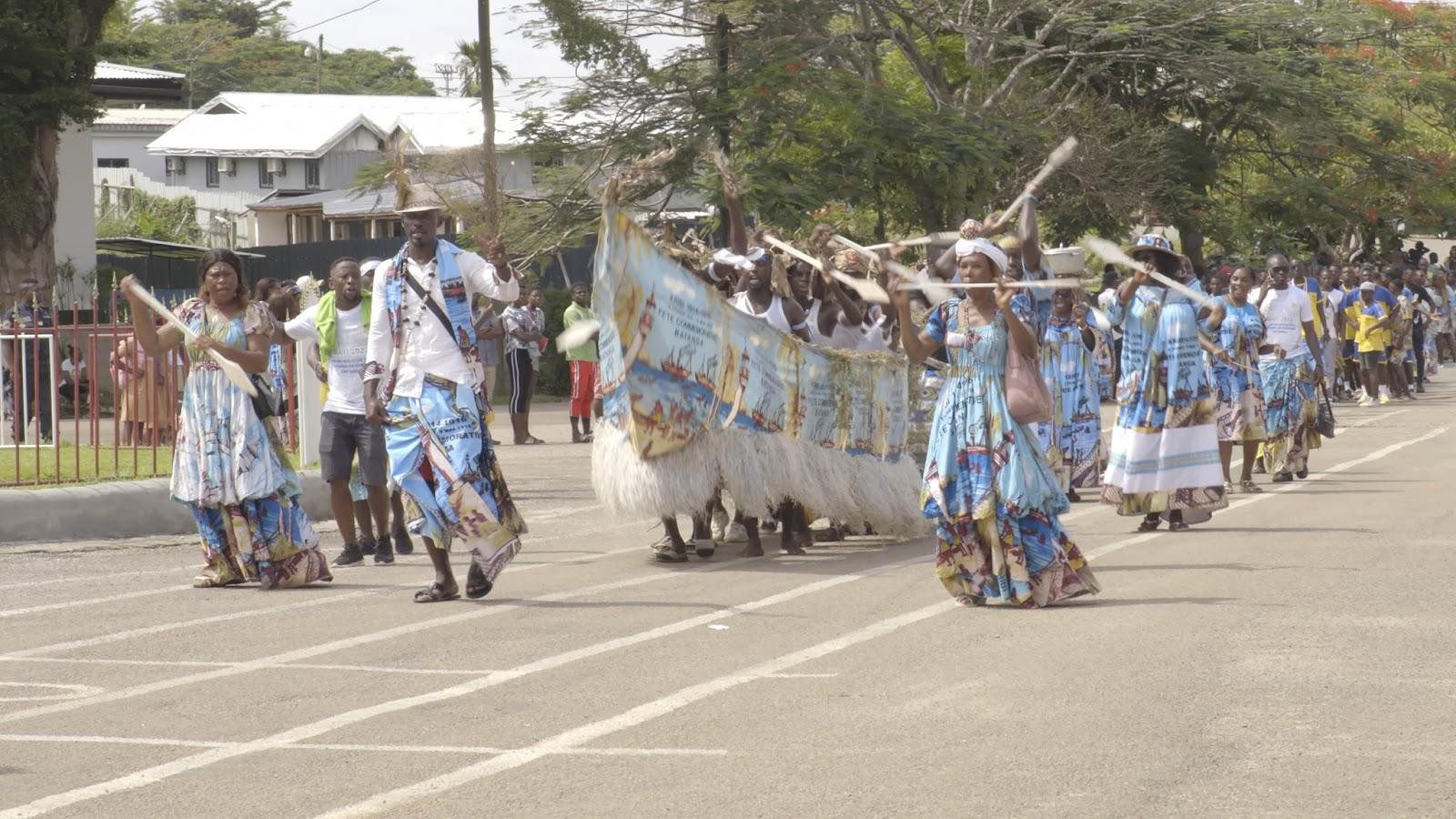
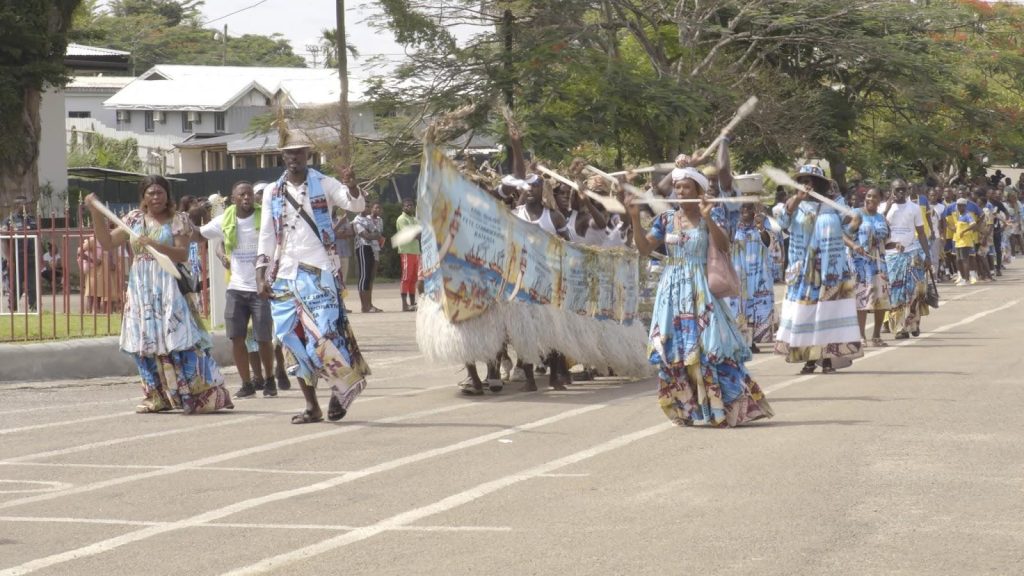
In 1916, after the Germans were defeated, the Batanga were allowed to return home. This return is the single most important event in Kribi’s history. It is celebrated twice a year (dates vary by specific sub-group commemoration, but February 14th and May 9th are the major dates).
- The Modern Celebration: In 2026, this is not a somber memorial; it is an explosion of joy. It is Kribi’s “Independence Day.”
Chapter 4: The Architecture of Heritage — The Lighthouse
Standing guard at the mouth of the Kienké River is the Phare de Kribi (Kribi Lighthouse).
The Sentinel of the South
Constructed by the Germans in 1906, this red-and-white brick tower is the most photographed structure in the region. But look closer.
- Engineering: It was built to guide trade ships extracting rubber and ivory. Today, it guides the massive container ships of the global economy.
- The Symbol: For the locals, the Lighthouse is a survivor. It withstood the wars, the exile, and the ocean storms. It represents the permanence of Kribi.
- 2026 Status: The area around the lighthouse has been renovated into a cultural plaza. It is the best place to find local artisans selling their crafts.
Chapter 5: The Mayi Festival — A Spectacle of the Sea
If you can plan your trip to coincide with the Mayi Festival (usually in May) or the Fêtes du Retour (February), you will witness the raw power of Batanga culture.
The Pirogue Races
This is the main event. It is the “Formula 1” of the coast.
- The Boats: These are not recreational canoes. They are racing machines, carved from a single massive tree trunk, streamlined for speed. They are often painted in the bright colors of the clan or village they represent.
- The Teams: Each pirogue is manned by 20–40 rowers. They stand or sit in perfect unison, paddling to the rhythm of a drummer and a “Griot” (whistle blower/chanter) who sets the pace.
- The Race: The energy is electric. Thousands of spectators line the beach. The muscular endurance required to race these heavy boats through the Atlantic surf is immense. It is a display of martial strength and cooperative unity.
The Miss Batanga Pageant
This is not a standard beauty contest. The “Miss Batanga” is judged on her knowledge of the dialect, her skill in traditional dance (Ivanga), and her understanding of tribal customs. She becomes the cultural ambassador for the year.
Chapter 6: The Art of Living — Crafts, Dance, and Music
Culture in Kribi is tactile and sonic.
The Ivanga Dance
This is the dance of the Batanga women. It is elegant, slow, and hypnotic, involving the fluid movement of the hips and arms, mimicking the motion of the waves.
- The Attire: Women wear the Kaba Ngondo—a large, free-flowing dress similar to the Kaba of the Duala people, but often styled with distinct Batanga patterns.
- The Context: You will see this dance at weddings, funerals, and festivals. It is a storytelling medium.
Master Boat Builders
Walk along the beaches of Londji, and you might see men hollowing out a massive tree trunk. This is an ancient science.
- The Selection: The tree is chosen deep in the forest. Libations are poured to ask the forest spirit for permission to cut it.
- The Carving: No blueprints are used. The builder uses his eyes and hands to ensure the boat is perfectly symmetrical and buoyant. In 2026, seeing a young man learning this trade from an elder is a powerful sign that the culture is resisting the pull of the digital age.
Basketry and Weaving
Using rattan and palm fibers, local artisans create intricate baskets, mats, and fish traps. These are functional art pieces. In the era of plastic, these biodegradable, handcrafted items have become premium souvenirs for the eco-conscious traveler.
Chapter 7: The Modern Challenge — Tradition vs. The Port
We cannot write a 2026 guide without addressing the elephant in the room: Industrialization.
The Conflict
The construction of the Deep Sea Port required the displacement of some villages. Sacred groves were cleared for warehouses. The influx of money and foreign workers has put pressure on the traditional way of life.
The Adaptation
However, the Batanga are resilient. Instead of vanishing, the culture has adapted.
- Economic Integration: The Chiefs have negotiated for jobs and contracts for local youth.
- Cultural Preservation: There is a renewed interest in teaching the Batanga language in schools to ensure it is not lost to French or English.
- The Balance: Today, you will see a Batanga port engineer who wears a suit during the week but dons his traditional loincloth and paddles the sacred pirogue on Sunday. This duality is the face of modern Kribi.
Chapter 8: How to Experience the Culture Respectfully
As a visitor, you are a guest in someone else’s ancestral home. Here is how to engage with integrity.
- Ask Permission: Before photographing an elder, a ceremony, or a sacred site, always ask. A simple nod or “C’est possible?” goes a long way.
- Visit the Chefferie: If you have the opportunity to visit a Chief’s palace (often just a large, well-maintained compound), dress modestly. Remove your hat. Bring a small gift (a bottle of whisky or wine is the traditional token of respect for the ancestors).
- Support Local Artisans: Instead of buying Chinese-made souvenirs in a hotel gift shop, go to the artisan village. Buy a carving from the man who made it. The money goes directly to feeding a family and keeping the craft alive.
- Hire Local Guides: When visiting Lobe or the forest, hiring a Batanga guide ensures that the story you hear is the authentic one, and your money supports the indigenous community.
Conclusion: The Eternal Rhythm
Kribi is changing. The skyline is rising, and the ships are getting bigger. But if you sit on the beach at Grand Batanga at night, away from the LED lights of the hotels, you will hear the drums. You will hear the same Atlantic surf that greeted the Batanga ancestors centuries ago.
The concrete and steel of 2026 are just the shell; the culture is the ghost in the machine. To visit Kribi without tasting this culture is to visit a body without a soul. Open your eyes, open your ears, and let the spirit of the Water People welcome you.